
IoT Smart Home: Making Everyday Life Smarter
What Is an IoT Smart Home?
An IoT (Internet of Things) smart home is a home where everyday devices are connected to the internet and communicate with each other. These devices can be controlled remotely through a smartphone, tablet, or voice assistant.
From smart bulbs and thermostats to security cameras and smart locks, IoT technology makes homes more connected, convenient, and efficient.
How Does It Work?
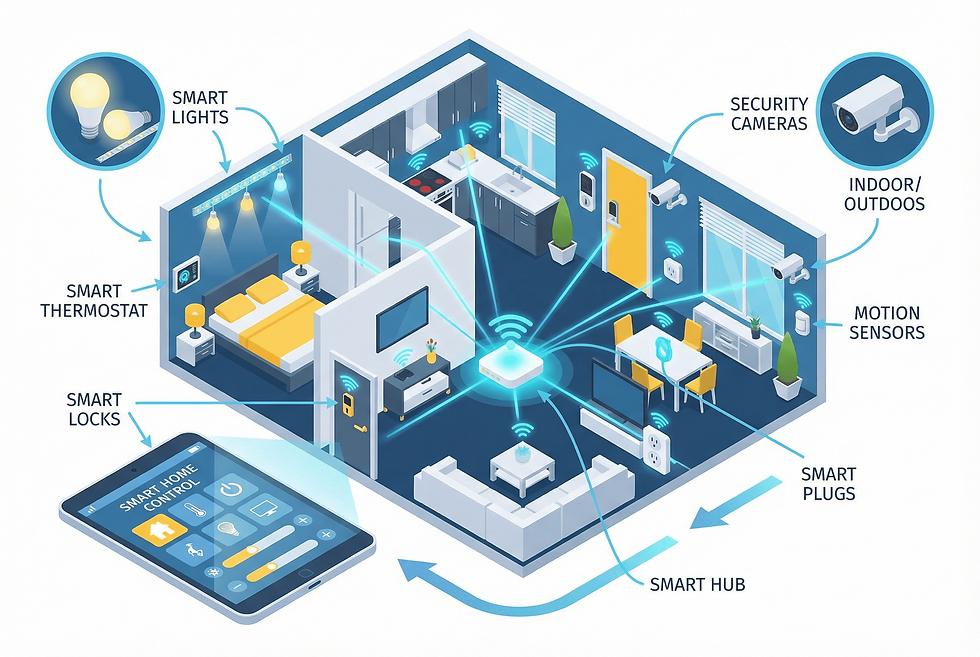
A smart home typically includes:
- Smart Devices: Lights, cameras, sensors, locks, and appliances.
- Internet Connectivity: Wi-Fi, Ethernet, or other wireless technologies.
- Smart Hub or Controller: Connects and manages compatible devices.
- Mobile App: Allows users to monitor and control their home remotely.
- Automation: Devices perform tasks automatically based on schedules, sensors, or user preferences.
For example, a motion sensor can detect when someone enters a room and automatically turn on the lights.
Benefits of IoT Smart Homes
1. Convenience
Control your lights, appliances, and security devices from anywhere using your smartphone or voice commands.
2. Energy Efficiency
Smart thermostats, lighting systems, and energy monitors can help reduce unnecessary energy consumption.
3. Improved Security
Smart cameras, door sensors, motion detectors, and smart locks provide better visibility and control over home security.
4. Comfort and Automation
Create customized routines, such as turning off all lights, locking doors, and adjusting the temperature with a single command.
5. Remote Monitoring
Whether you are at work or traveling, you can check your home’s status and receive alerts when something unusual happens.
Common IoT Smart Home Devices
| Device | Function |
|---|---|
| Smart Lights | Remote control and automated lighting |
| Smart Thermostat | Temperature control and energy management |
| Smart Cameras | Remote monitoring and security |
| Smart Locks | Keyless entry and access control |
| Motion Sensors | Detect movement and trigger automation |
| Smart Plugs | Control connected appliances remotely |
| Smart Doorbells | Monitor visitors and receive notifications |
The Importance of Network Security
Because smart home devices are connected to the internet, security is essential. Users should:
- Use strong and unique passwords.
- Keep devices and firmware updated.
- Secure their Wi-Fi network.
- Enable two-factor authentication where available.
- Avoid connecting unknown or untrusted devices.
- Use a separate network for smart devices when possible.
A secure network helps protect personal data and prevents unauthorized access.
The Future of Smart Homes
As IoT technology continues to develop, smart homes are becoming more intelligent and efficient. Artificial intelligence, voice control, energy management, and advanced automation will make it easier for homeowners to manage their living spaces.
The future of smart homes is not just about controlling devices—it is about creating a connected environment that understands your needs and improves everyday life.
Conclusion
IoT smart homes combine technology, connectivity, and automation to create safer, more comfortable, and energy-efficient living spaces. Whether you start with smart lights or build a complete home automation system, IoT offers exciting possibilities for modern living.
A smarter home starts with a connected home.